For convenience store owners
2026 C-Store Margin Guide: Foodservice, Fuel & the Front Counter
Fuel fills the lot. The inside of the store fills the register. Here is where the real gross profit sits in 2026, and how to stop giving it back at the counter.
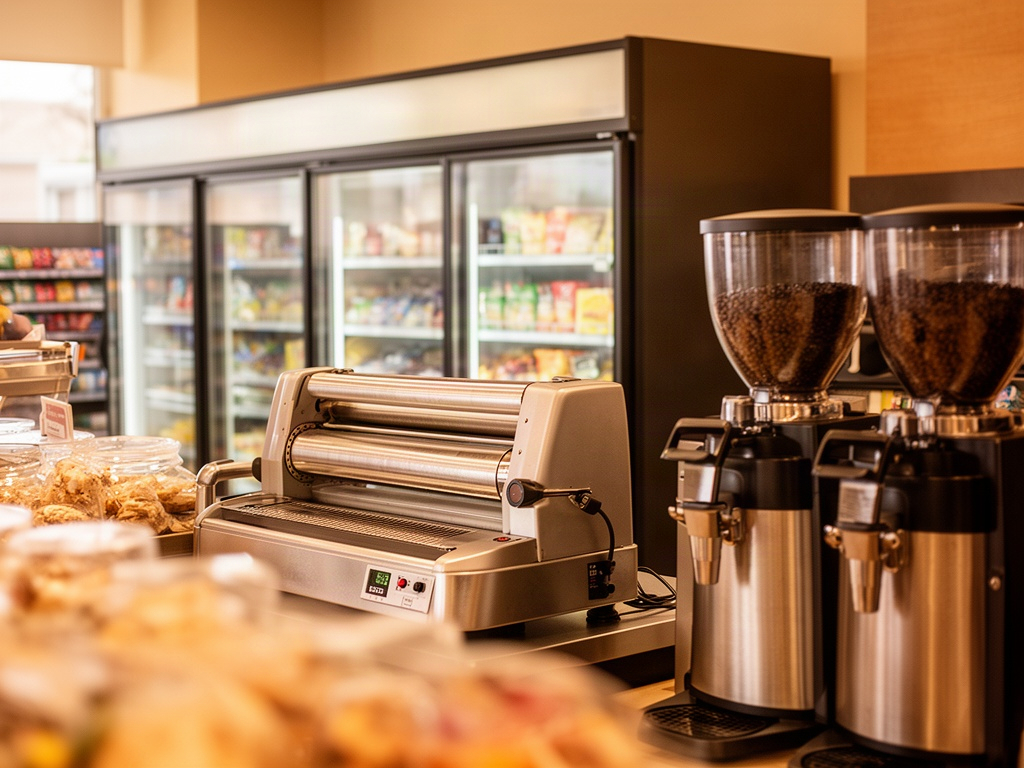
Most c-store owners can quote their fuel price to the penny and could not tell you the gross margin on their coffee. That is backwards. Fuel moves the most money across the counter, but it hands you the thinnest slice of profit. The food, the drinks, and the hot case are where the margin actually lives. In 2024, U.S. convenience stores posted $335.5 billion in in-store sales, the 22nd straight record year, and foodservice did most of the heavy lifting on profit.
Source: NACS State of the Industry, 2024.
Fuel gets the traffic, inside gets the profit
Fuel is about 65% of total sales dollars but only 38.8% of gross profit. It is a loss-leader magnet that pulls cars in. The money follows those customers through the door, not the pump.
Foodservice punches above its weight
Foodservice was 27.7% of in-store sales in 2024 but 38.6% of in-store gross margin dollars. Every point of sales you shift into food earns more than a point shifted into most other categories.
The hot and cold dispensers are your best real estate
Hot dispensed drinks run around a 63% gross margin. A coffee bar, a fountain, and a frozen machine turn cheap inputs into some of the richest dollars in the building. Keep them clean, stocked, and running.
Know margin per category, not just total sales
A category can be your biggest seller and one of your weakest earners at the same time. Cigarettes are a good example: still a big share of sales, thin on margin. Rank every category by gross margin dollars, not shelf feet.
The cigarette shift is already happening
Cigarettes fell from 30.9% of in-store sales in 2015 to 18.8% in 2024. That volume and the traffic it drove are walking out the door. Plan the space and the trip driver that replaces it before the decline forces your hand.
Foodservice margin is high, but it is not free
That 54.5% on prepared food assumes you sell it before you throw it out. Labor, prep, and holding times all pull against it. A strong food program lives or dies on execution during the two or three dayparts that actually move product.
Watch the fresh case like a hawk
Spoilage is the tax on a food program. Date every item, rotate on a schedule, and build the par down to what a normal day actually sells. Fresh food you dump at close came straight out of that 54.5%.
Shrink is a number, so measure it
National retail shrink hit 1.6% of sales in 2022, and most of it is theft split between the counter and the crew. You cannot fix a leak you never count. Do a real physical inventory, compare it to what the register says you sold, and act on the gap.
Sell to the daypart
Morning coffee and breakfast, then a lunch rush, behave like two different stores. Match the hot case, the staffing, and the promos to when people actually buy. An empty roller grill at 11:45 is lost margin you never get back.
Do not build your budget on fuel margin
Street price swings week to week and the spread can vanish overnight. Treat fuel as the thing that fills the lot and steady in-store margin as the thing that pays the bills. One is a traffic tool, the other is your business.
Keep a live price book
Cost creep is quiet. Distributor prices move, but retails often sit still for months and quietly erode margin. Review cost against retail by category on a set schedule so a supplier increase does not silently become your loss.
Card fees come out of the thinnest dollars you have
On a low-ticket, high-count business, processing fees hit hard because they scale with every swipe, not with your margin. A fountain drink at 60% margin can lose a real chunk of that to fees. Know your effective rate as a percent of sales and treat it like any other category cost. SimblPay will read your statement and show you the real number.
Benchmarks drawn from NACS foodservice subcategory margins (prepared food ~54.5%, dispensed drinks higher). Below 50% usually means waste or costing, not pricing.
You can quote your fuel price to the penny. Can you quote the margin on your coffee?
Do this today
Your ten-minute margin check
| Prepared food | Write your gross margin %. Aim above 50%. |
|---|---|
| Dispensed drinks (hot, cold, frozen) | Usually your richest category. Confirm it. |
| Packaged beverages | Around 44% is typical. Compare yours. |
| Cigarettes and tobacco | Big sales, thin margin. Know the real number. |
| Card fees, as a % of total sales | Total fees divided by total sales. This is a category cost too. |
Fill in your own numbers from last month, then rank the rows by gross margin dollars. The bottom of that list is where your next decision starts.
The pump gets all the attention, but the margin has quietly moved inside. Foodservice and dispensed drinks earn more per dollar than almost anything else you sell, cigarettes are handing back sales every year, and shrink and fees skim the thin dollars you have left. None of this needs a remodel. It needs you to count what each category actually earns, protect the fresh case, and stop losing margin between the sale and your bank.
Sources
- NACS, C-Store Foodservice Delivered Exceptional Growth in 2024, convenience.org
- NACS, U.S. Convenience In-Store Sales, convenience.org
- NACS, Who Makes Money Selling Gas, convenience.org
- NRF, National Retail Security Survey 2023, nrf.com