For medical practice owners & managers
2026 Guide to Reducing Patient Collections Headaches
Patients now owe more out of pocket than ever, and the money is getting harder to collect. Here is how small practices tighten up estimates, statements, and front-desk asks so more of what you earn actually shows up.
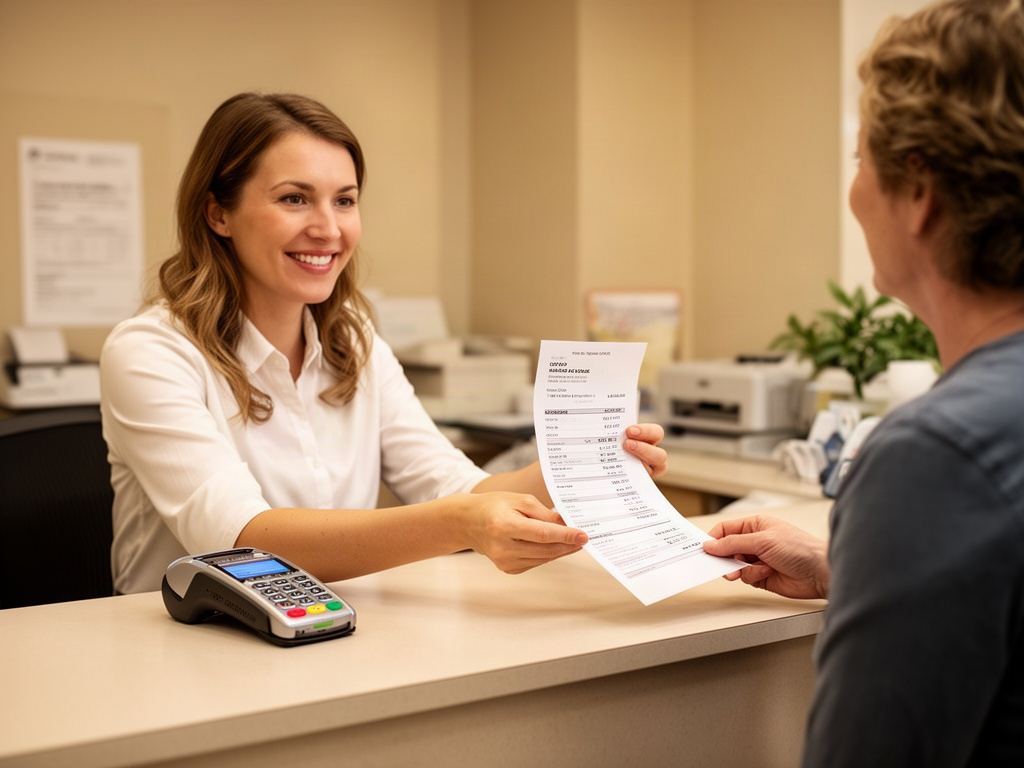
Insurance used to be most of a practice's revenue and most of it got paid. That has changed. Deductibles keep climbing, so a bigger slice of every visit is now the patient's own money, and patient money is the hardest to collect. Health systems got only about 45% of what patients owed them in 2024. The gap is not usually about patients refusing to pay. It is about being asked late, getting a bill they do not understand, or having no clear way to pay over time.
Source: Medman; TechTarget revenue cycle reporting.
Give a real estimate before the visit
Run the patient's benefits and hand them a number they can plan for. An estimate turns a scary unknown into a decision. Practices that estimate consistently collect far more up front, and patients who see a number ahead of time pay more reliably than patients who get a surprise bill.
Ask at the front desk, every time
Balances collected at the visit land 90 to 95% of the time. The same balance billed later drops to 30 to 40%. Train the desk to state the amount plainly and ask for it, not hint at it. A calm, consistent script does more than any collections agency.
Collect the copay and known balance up front
The copay is the easy one. Add any prior balance and the known patient portion of today's visit to the same conversation. One ask at check-in beats three statements over ninety days.
Set a clear financial policy and post it
Put your payment expectations in writing, have patients sign once, and post it at the desk. When the policy is visible, asking for payment stops feeling personal and starts feeling routine. Staff hold the line more easily when there is a policy behind them.
Make the statement readable in ten seconds
Most patient statements are built for billers, not patients. Show the date, the service, what insurance paid, what the patient owes, and one obvious way to pay. Cut the codes and jargon. A statement someone understands is a statement someone pays.
Offer payment plans before a balance goes cold
Big deductibles mean bills people cannot clear in one shot. A simple monthly plan keeps that money coming in instead of aging into bad debt. Offer it early, at the visit or on the first statement, not after three unanswered notices.
Keep a card on file with permission
With written patient consent, a card on file lets you charge the agreed balance once insurance adjudicates. It removes the statement-and-wait cycle for the small, predictable balances that clog up your AR. Be transparent about what you will charge and when.
Verify eligibility before the patient arrives
Check coverage, deductible status, and plan changes a day or two ahead. Half of collections problems start with a stale eligibility check and a copay that was wrong. Knowing the real numbers before check-in makes the front-desk ask accurate.
Watch patient AR and time-of-service rate
Track how much you collect at the visit and how fast patient balances age. If most of your patient money is sitting past 90 days, the fix is earlier in the process, not in collections. What you measure at the desk is what improves.
Send reminders on the channel people read
A text or email with a pay link gets opened and paid faster than a paper statement that sits on a counter. Meet patients where they already are, keep the message short, and make the link work on a phone.
Fix the front desk before you blame patients
Slow eligibility checks, no estimate, no card reader at the desk, an unclear script. These are process gaps, not patient problems. Most of the collection rate you are missing is recoverable by tightening the first five minutes of the visit.
Give patients modern ways to pay and see your true rate
Tap, chip, text-to-pay, and online links all lift how often patients pay, but processing fees quietly eat the margin on every one. SimblPay reads your current statement line by line, shows your real effective rate, and supports secure payment workflows so you can offer easy payment options without overpaying to accept them.
The industry benchmark for point-of-service collections is about 35%. Many practices start under 20% and reach 60 to 70% within a few months of asking consistently. Source: MD Clarity; Medman.
The gap is rarely patients refusing to pay. It is being asked too late, getting a bill they cannot read, and having no easy way to pay over time.
Do this today
A 15-minute front-desk collections check
| Do you verify eligibility before the patient arrives? | If no, start with tomorrow's schedule. |
|---|---|
| Does the front desk state the exact amount owed and ask for it? | Write one short script and use it every time. |
| Can a patient understand your statement in ten seconds? | Pull your last statement and time yourself. |
| Do you offer a monthly payment plan at the first bill? | Set a default plan for balances over a threshold. |
| Do you know your effective payment processing rate? | Pull last month's statement and check the real number. |
Five questions. If you answered no to two or more, that is where your patient AR is leaking.
None of this requires new staff or software you have to learn for a month. It requires asking earlier, writing clearer, and giving people a way to pay that fits how much they now owe. Start with the estimate and the front-desk ask. Those two changes recover more patient money than anything you can do after the bill goes out.
Sources
- Kodiak Solutions, State of the Healthcare Revenue Cycle, kodiaksolutions.io
- KFF, 2024 Employer Health Benefits Survey, kff.org
- Medman, Time-of-Service Collections, medman.com
- MD Clarity, Point-of-Service Collections benchmarks, mdclarity.com