For restaurant & tavern owners
2026 Restaurant Margin Guide: Where Every Point of Profit Hides
A busy dining room does not mean a healthy business. Most of your profit is won or lost in four line items, and none of them are on the menu. Here is where to look.
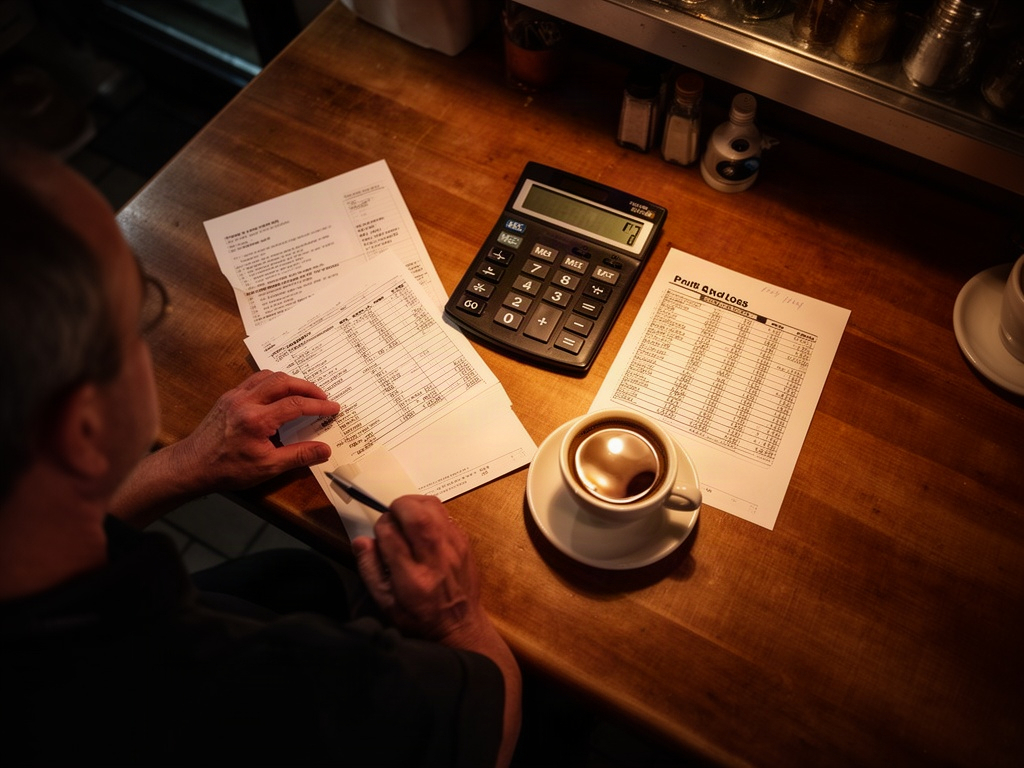
Restaurants are a volume business with a thin cushion. A full-service operation keeps three to five cents of every dollar after everything is paid, and plenty keep less. The good news is that the leaks are predictable. Food cost drifts up quietly. Labor gets scheduled by habit instead of by the sales curve. Delivery apps take a bigger bite than the number on the contract. And the money you did earn sits in processing fees you never read.
Source: Rezku, DoorDash published plan tiers (rezku.com).
Cost your recipes, not your guesses
Food cost belongs in the 28 to 35% range for most formats. If you have never plated a recipe and priced each ingredient, you are guessing. Start with your ten best sellers. Those ten set your whole food cost, and a small error there repeats every night.
Take inventory on a schedule
Waste, over-portioning, and theft do not show up in a single number. They show up as the gap between what you bought and what you sold. Count key items weekly. The gap is your actual food cost, and it is almost always higher than the theoretical one on paper.
Schedule to the sales curve
Labor runs 25 to 35% of sales, and full-service operators often sit near the top. The fix is rarely cutting people. It is matching the schedule to when guests actually come in. Pull last year's hourly sales and staff to that shape instead of to a standard shift.
Watch prime cost like a hawk
Prime cost is food plus labor, and it is the one number that tells you if the business works. Keep it at or below 60%. Above 65% and the math gets very hard no matter how full the room is. Check it weekly, not at year end when it is too late to steer.
Know the true cost of delivery
The commission on the contract is not the whole bill. Once processing, required promotions, and add-on fees stack up, a delivery order can cost 30 to 40% of the ticket. That can turn a profitable dish into a loss. Price your delivery menu for that, or it eats the dine-in profit.
Push guests toward your own channel
Every order you take directly is an order you keep the margin on. A phone order, your own website, or pickup avoids the commission entirely. Give guests a reason to order direct and treat the apps as paid discovery, not your main counter.
Reprice the menu on purpose
Food and other costs are well above where they sat a few years ago. If your prices have drifted up by feel, some items are underwater and you do not know which. Reprice from a costed recipe. A quarter here, fifty cents there, on the right items, moves margin without scaring anyone off.
Engineer the menu, do not just print it
Every dish falls into one of four buckets: high margin and popular, high margin and slow, low margin and popular, low margin and slow. Feature the first, reposition the second, fix or cut the fourth. The menu layout itself is a margin tool.
Read your P&L monthly
You cannot manage what you only see at tax time. A monthly profit and loss statement, with food, labor, and occupancy as a share of sales, turns a vague sense of the business into numbers you can act on before the trend hardens.
Track comps and voids
Comped meals, voids, and discounts are real dollars that never hit the deposit. When they climb, something is off in the kitchen or at the point of sale. Pull the report weekly and ask why. It is one of the fastest leaks to find and close.
Read your card processing statement
Card fees are a cost of goods that most owners never audit. On thin restaurant margins, a point of effective rate is real money. SimblPay reads your statement line by line and shows your true effective rate, so you know exactly what accepting a card is costing you.
Net profit margin, after all costs. Full-service tends to run lower than quick-service and fast casual.
A full room hides a lot. The P&L does not.
Do this today
Find a point of margin in 20 minutes
| Cost out your 3 top sellers | Price every ingredient. Compare to menu price. Are any under 65% margin? |
|---|---|
| Pull last week's prime cost | Food plus labor divided by sales. Over 65%? Start there. |
| Total one week of delivery fees | Add commission plus every add-on. Divide by delivery sales for your real rate. |
| Check comps and voids | One week. If the number surprises you, that is a leak worth chasing. |
| Find your last card statement | You will read your effective rate off it next, and it is usually higher than quoted. |
Five numbers. None take long. Together they tell you where your profit is hiding.
None of this requires a new concept or a bigger room. It requires looking at the numbers you already generate every night and acting on them before the month closes. Food cost, labor, delivery, and fees are where the points live. Pick one this week, fix it, then move to the next.
Sources
- National Restaurant Association, 2025 State of the Industry, restaurant.org
- Toast, restaurant labor and food cost benchmarks, pos.toasttab.com
- Rezku, third-party delivery fees explained, rezku.com
- Level, restaurant profit margins by type, levelcfo.com