For tire & auto service shops
2026 Tire Shop Profit Guide: Where the Margin Actually Is
Tires fill your bays, but they are your thinnest margin. The money is in the service work, the add-ons, and the season you plan for.
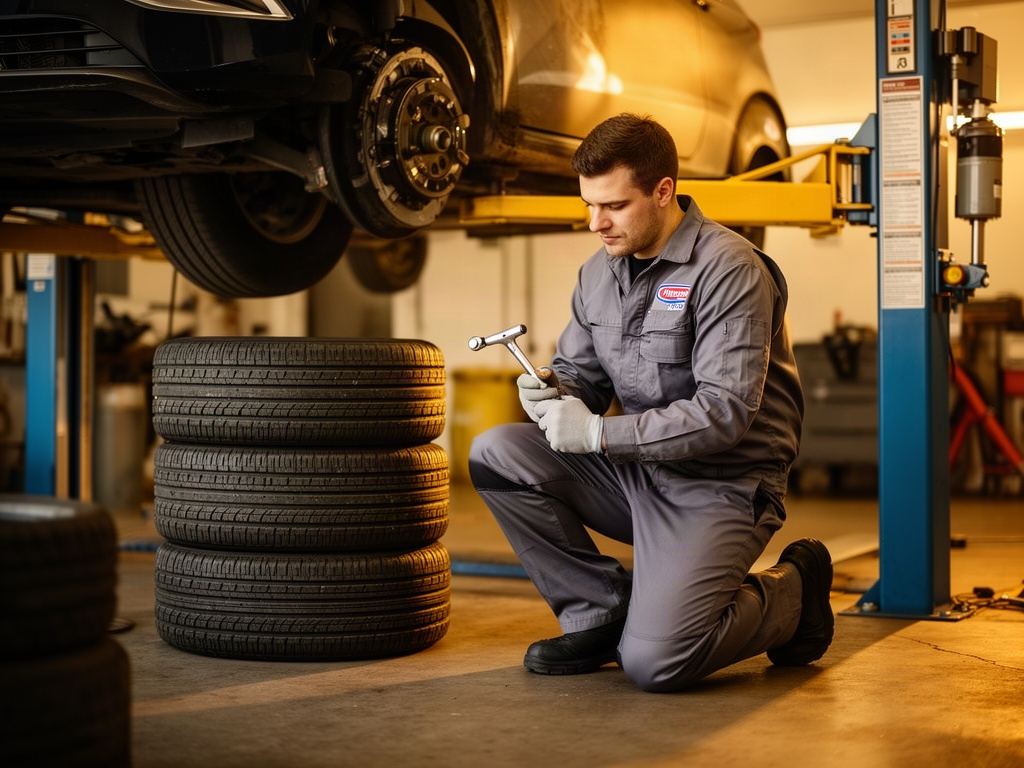
Most tire shop owners know their tire prices cold and barely track everything else. That is backwards. Tires pull cars into the lot, but the margin lives in the service bay, the add-ons at the counter, and how well you read the calendar.
Source: Tire Review, 2023. A service labor dollar is worth more than a tire dollar, every time.
Service is the engine, not the sideline
Auto service runs about 48% of tire dealer sales and 47% of total profit, per Modern Tire Dealer's survey. Retail service work carries a 49% gross margin against 40% on retail tires. If your bays sit empty between tire jobs, you are leaving your best margin on the floor.
Treat tires as the hook
Retail tire margins sit around 40%, the lowest of your major categories. That is fine. The set of tires is what gets a customer in the door and onto your alignment rack, your TPMS reset, and your next oil change. Price tires to win the job, then earn on everything attached to it.
Know your real revenue mix
Owners who can quote their tire-to-service split make better calls on staffing, bay time, and inventory. Pull last year's numbers and split tires, service labor, and parts. If service is well under 40% of sales, you have room to grow the higher-margin side of the shop.
Road hazard is quiet money
Road hazard coverage runs roughly $10 to $20 per tire, often 10 to 15% of the tire price, and it is a high-margin add-on. Dealers who offer it on every eligible set report average order value up 8 to 20%, per Consumer Priority Service. The only shops that miss this are the ones who forget to ask.
Sell the services with the fattest margins
Alignments average a 75% gross margin and TPMS service about 65%, per Tire Review. These pair naturally with a tire sale and take little bay time. Build them into the tire quote as a recommendation, not an upsell after the fact.
Plan for the fall and winter surge
Winter tire demand climbs about 40% between October and February, per AutoLeap, and fall is when drivers replace tires beaten up over the year. Stock, staff, and schedule for that swing. A shop that runs lean through a busy October is turning away margin it cannot get back.
Raise the average repair order
Tire-focused shops typically run a $300 to $450 average repair order, while strong general repair shops clear $500-plus, per PartsTech. The gap is service attach. A consistent inspection and a clear recommendation on every car moves that number without pushing anybody.
Use a digital inspection every time
Tekmetric's 2024 data shows repair orders authorized digitally average 50% higher value than those without. Photos of a worn belt or a leaking shock do the selling for you. The customer sees the problem and approves it from their phone, and the ticket grows on its own.
Watch your bay time and parts-to-labor
A common benchmark is $0.80 to $1.00 in parts for every $1.00 of labor. If your parts run way ahead of labor, you are moving product without selling enough of the work that carries margin. Track hours billed per bay per day and you will see where the money leaks.
Check the numbers weekly, not yearly
The shops that grow margin look at car count, average ticket, and gross profit every week, not once at tax time. Small drifts are cheap to fix in seven days and expensive to fix in twelve months. Pick three numbers and post them where the team can see them.
Stop giving margin back at the counter
You fight for every point of gross profit, then hand a chunk of it to your card processor without reading the statement. Card fees on a $400 ticket add up fast across a busy Saturday. Know your effective rate, because that is real margin you already earned. SimblPay can read your statement and tell you what you are actually paying.
Tire industry gross margins commonly run 30 to 50%, and a 60% blended target is achievable for shops that sell both tires and service. Source: BayIQ and Modern Tire Dealer.
The tires get them in the door. The service work is what pays the bills.
Do this today
Three numbers to pull before you close tonight
| Revenue mix | Split last month into tires, service labor, and parts. If service is under 40%, that is your growth line. |
|---|---|
| Road hazard attach | Count how many of last week's tire sets included road hazard. Anything under half is money left on the counter. |
| Average ticket | Divide last month's sales by car count. Write it down and try to beat it next month with one added inspection per car. |
Fifteen minutes now tells you where your margin actually is.
Tires bring the cars in. What you do with them once they are on the rack is the whole game.
Sources
- Tire Review — How Sales and Service Affect Tire Dealer Profit Margins, 2023, tirereview.com
- Modern Tire Dealer — Tire Dealer Automotive Service Survey, moderntiredealer.com
- AutoLeap — Understanding Seasonal Tire Trends and Inventory Management, 2024, autoleap.com
- PartsTech — Revenue Benchmark Data for General Auto Repair Shops, 2024, partstech.com
- Consumer Priority Service — Road Hazard and Wheel Protection Plans, cpscentral.com
- BayIQ — Maximizing Your Tire Shop's Profit Margin, blog.bayiq.com